Save The Mainland Moose
Registered Name: FEDERATION OF NOVA SCOTIA NATURALISTS
Business No: 891266744RR0001
This organization is designated by Canada Revenue Agency (CRA) as a registered charity. They comply with the CRA's requirements and have been issued a charitable registration number.
This charity is fully set up with CanadaHelps, allowing for faster donation processing and access to more features
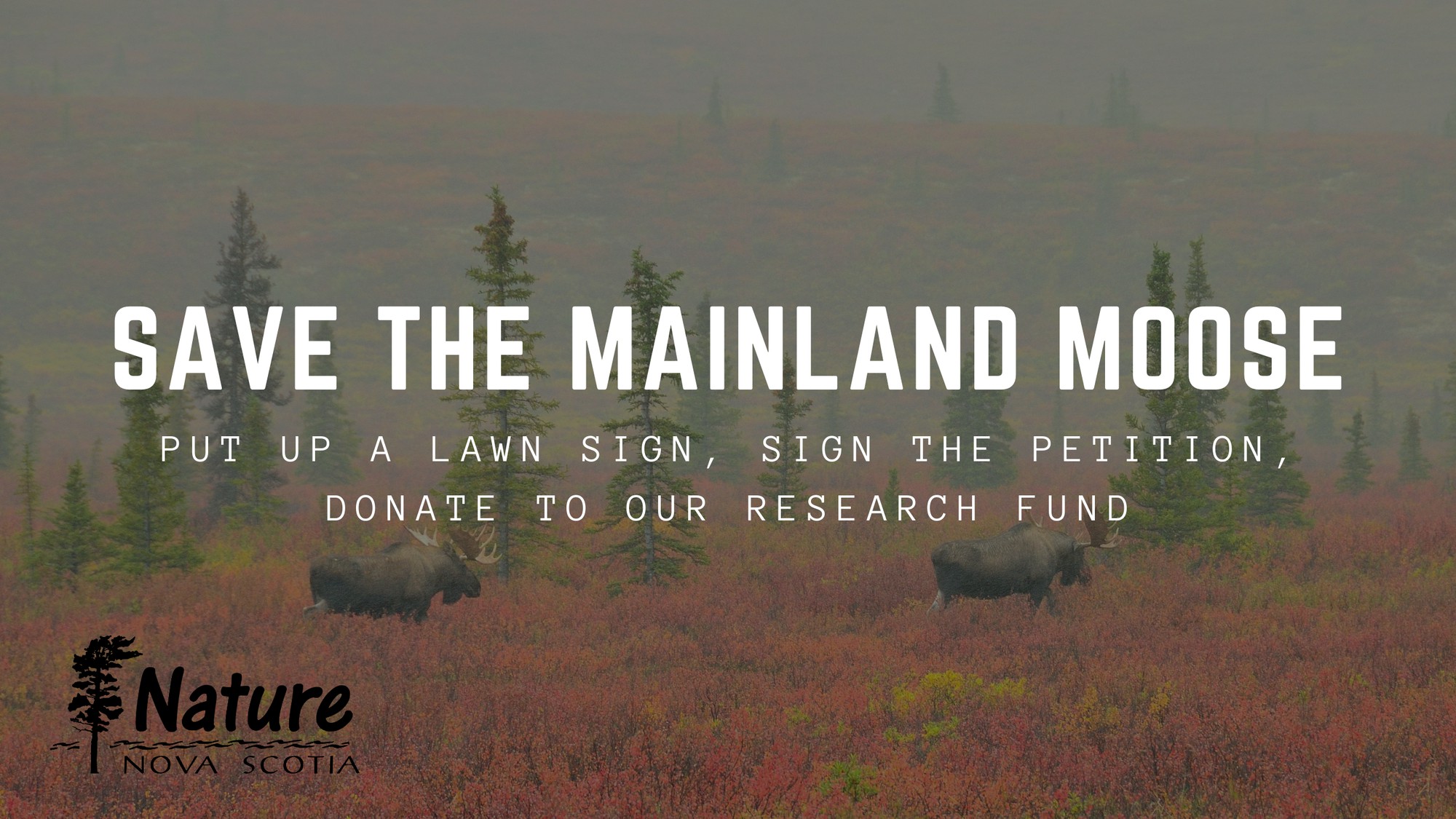
The mainland moose was listed under the provincial Endangered Species Act in 2003, requiring the province to produce a Status Report, examining the state of the population, and a Recovery Plan, guiding actions for species recovery. A Status Report was created in 2003, as required by the Act, though data were limited to only a handful of uncited studies from the 1980s and 90s and sparse for Southwest Nova Scotia. A Recovery Plan was released in 2007 (3 years late according to the legislation) which failed to identify Core Habitat or set a goal for recovery, stating only that existing numbers should be maintained. An Action Plan, created in 2013, offered some additional data, tools for stewardship, and opportunities for partnership, but little was accomplished by the 2018 “timeline” conclusion. The ineffective Recovery Plan, Action Plan, and lack of initiative from government in the years following prompted many criticisms from conservation, scientific, and legal organizations in the province.
The Mainland Moose is also one of the 6 Species At Risk featured in the Bancroft vs NS Lands and Forestry judicial review that supporters like you helped our nature network prepare for over 2019-2020. At court, we alleged that the province failed to establish a Recovery Team and create a Recovery Plan within the legal deadline (which is within one year of listing for endangered species like the mainland moose), as well as to identify Core Habitat, as required by the Recovery Plan process.
We won the case and in late 2021, a year and a half later, government released an updated Recovery Plan for the Mainland Moose, complete with Core Habitat.
Immediate Action Needed on Research and Forestry Reform
This new Recovery Plan outlines, for the first time ever, a population target assuming recovery of the species and a 20 year goal for increasing numbers: 5,000 moose including 500 breeding individuals, an increase of potentially ~4,000 individual moose. The Plan also identifies Core Habitat, using a combination of existing population data and known and projected suitable habitat, and specifically recommends government designate Core Habitat and implement new conservation measures within it to better protect moose. It emphasized the importance of transitioning to more ecological forestry practices on public and private lands, the need for protecting habitat connectivity through the protected areas system and local stewardship action, and the potential for partnerships with eNGOs and citizens to accomplish the Plan's goals.
Naturalists Step In To Fill The Gaps
The province has still not formally protected moose critical habitat, despite its own Plan recommendations, and, in early 2026, the Houston government dismantled the Wildlife Division and fired some of the biologists working on moose and other species at risk in Nova Scotia. Already seeing the need for organizations like ours to step in, and largely thanks to supporters like you, in 2022 we launched our own research project to help fill knowledge gaps for the mainland moose. We led a series of educational events over 2022-2026 sharing moose ID tips with participants and collected online, written, and in-person surveys from Nova Scotians revealing their observations and perceptions of moose conservation issues. We also launched a volunteer-stewarded trail camera network in moose habitat, which has since grown to over 70 cameras and counting!
Over 2026-2027, we want to build on this work by automating reporting and adding additional trail cameras to our moose monitoring network, focusing in particular on rural Halifax, Guysborough, Colchester, and Cumberland areas.
Our Findings to Date
Over 2022 to early 2026, we identified gaps in public awareness of the mainland moose, particularly among younger and urban-dwelling Nova Scotians, noted heightened concerns about poaching in the Tobeatic region and, encouragingly, found an increased awareness of moose conservation issues in the Cumberland/Colchester area, where moose sightings appear to be more prevalent.
Trail cameras have produced 7 confirmed moose and many other wildlife sightings to date. Our public knowledge and opinion survey has also produced hundreds of recent and historic moose sighting reports not previously reported to the province's biodiversity hotline.
We also confirmed our previous suspicions that many Nova Scotians are not reporting moose or signs of moose to the provincial hotline, with 3/4 survey respondents saying they were not aware of the provincial hotline or that they chose not to report their sightings due to mistrust or skepticism of provincial efforts to conserve the mainland moose or its habitat. These respondents do seem comfortable speaking with and reporting moose to Nature Nova Scotia staff, so we are hopeful that continued community engagement will break down these awareness- and trust-related barriers and result in more citizen science data generated for moose.
What Happens Next?
Nature Nova Scotia commends the province for finally producing a sound plan for the mainland moose and, in particular, for emphasizing the immediate need for additional research and changes to forestry practices in moose habitat. Now, Nova Scotians must hold government to this plan. Help us save the mainland moose by taking the following actions today:
- Demand the Minister of Natural Resources and Renewables designate Core Habitat for the Mainland Moose and implement regulations to protect the species, as identified and recommended by the moose Recovery Team
- Show your support for ecological forestry by putting up one of our Save Species At Risk lawn signs and demand Ecological Forestry Now by using our letter template to contact your MLA.
- Help us fundraise for more trail cameras and to engage more Nova Scotians, by making a donation to our Species At Risk Fund. We need to improve our understanding of where moose are in the landscape, how populations are changing over time, what management techniques are most likely to result in population growth, and what kinds of conservation options Nova Scotians support.
Over the last few years, we've learned the importance of speaking up for nature. Hikers, hunters, hobby naturalists, and retired scientists can make a difference when we work together. Join us.
Why CanadaHelps
Why donate to Nature Nova Scotia on CanadaHelps?

About CanadaHelps
We're a registered charity that provides simple and convenient tools to manage your charitable giving to any Canadian charity of your choice.
Where Your Gift Goes
Charities that set up to receive electronic funds transfers from us will receive your donation quickly, so it can be put to work faster.
Tax Benefits of Donating
Get an instant tax receipt, manage all your tax receipts in one place, and make a difference while maximizing your tax credits with ease.