Peer-to-peer fundraising is growing, but here’s the thing: many charities still treat it like a one-and-done campaign tactic rather than what it really is: an opportunity to build lasting relationships. In this recent webinar, Jessica Pang-Parks challenged us to rethink this approach by applying volunteer stewardship practices to P2P fundraising. If you missed it, we encourage you to watch the recording. Jessica’s insights offer a genuinely transformative way to support community-based fundraising.
Reframing Peer-to-Peer Fundraising
Jessica opened by helping us see peer-to-peer fundraising differently. Sure, it’s easy to focus only on dollars raised. But P2P fundraisers give so much more than that. She introduced the “5 Ts of Philanthropy” to show the full scope of what supporters contribute:
- treasure (cash, stocks, and in-kind gifts)
- time (the only non-renewable resource)
- talent (skills of all kinds)
- ties (their personal networks)
- testimony (their voice and story)
What stood out most was Jessica’s exploration of why people choose to fundraise. For many, it’s deeply personal. It connects to their identity, their lived experience, or their sense of meaning and belonging. When fundraising ties to personal stories or grief, it involves real emotional labor. Understanding this changes everything about how we should support these individuals.
The Heart of Stewardship
Jessica walked us through what good stewardship actually looks like. Building genuine relationships, recognizing people as individuals, and being responsive matter way more than thank-you gifts. She challenged us to ask: “How can we help folks engaged with P2P continue supporting the mission in a way that works for them?”
This question is crucial. Stewardship isn’t just about getting fundraisers ready for the next campaign. It’s about honoring their contributions and supporting them in ways that fit their own goals.
Sometimes people may have to change the way that they engage with your cause, the best thing to do is to provide them with various options and meet them where they are.
Addressing Common Challenges
Jessica discussed three challenges that P2P programs often face, along with practical solutions for each.
Challenge 1: Fundraisers feel undervalued.
This happens when organizations celebrate only top fundraisers while overlooking others. Jessica shared solutions like letting fundraisers set their own goals and making sure every thank-you message shares real impact. She emphasized that the best investment in recognition is ensuring that the P2P experience is organized and supportive. Translation? Many charities focus on gifts and branded swag to their own detriment. A fun water bottle won’t fix a disorganized program.
Challenge 2: Lack of clarity.
P2P fundraisers get confused when they receive mixed messages or don’t understand their role. Creating clear FAQ documents and helpful guides makes a big difference. Jessica recommended job aids like fundraising page templates, video tutorials, network mapping worksheets, and social media copy that fundraisers can easily use. She also encouraged the audience to organize kickoff events that support both clarity and belonging, and shared a helpful resource on inclusive volunteer teambuilding.
Challenge 3: Unintentional harm to people with lived experience.
This one’s important. Jessica encouraged the audience to check out resources on ethical storytelling and community-centric fundraising to better understand why and how to handle it. Her advice for sharing stories from the community is to focus on positive, strengths-based messages. Fundraisers should always know they can share as much or as little as they want and that there’s no need to share their pain just to raise more money.
Beyond the Campaign
Jessica reminded us that stewardship matters year-round and shouldn’t end just because all the tax receipts have been sent. Keep fundraisers connected through advocacy, volunteering, and other ways to stay engaged (like events). This builds stronger relationships that go beyond a single campaign.
Key Takeaways
P2P fundraisers often have a personal connection to your mission, so be thoughtful when asking them to share their stories. Providing clear guidance matters more than expensive gifts. Most importantly, when you care about the individual, they’ll support your cause far beyond one campaign.
As Jessica said: You got this!
Q&A Roundup
Q: What can I use to run my P2P events without amassing hundreds of pieces of paper?
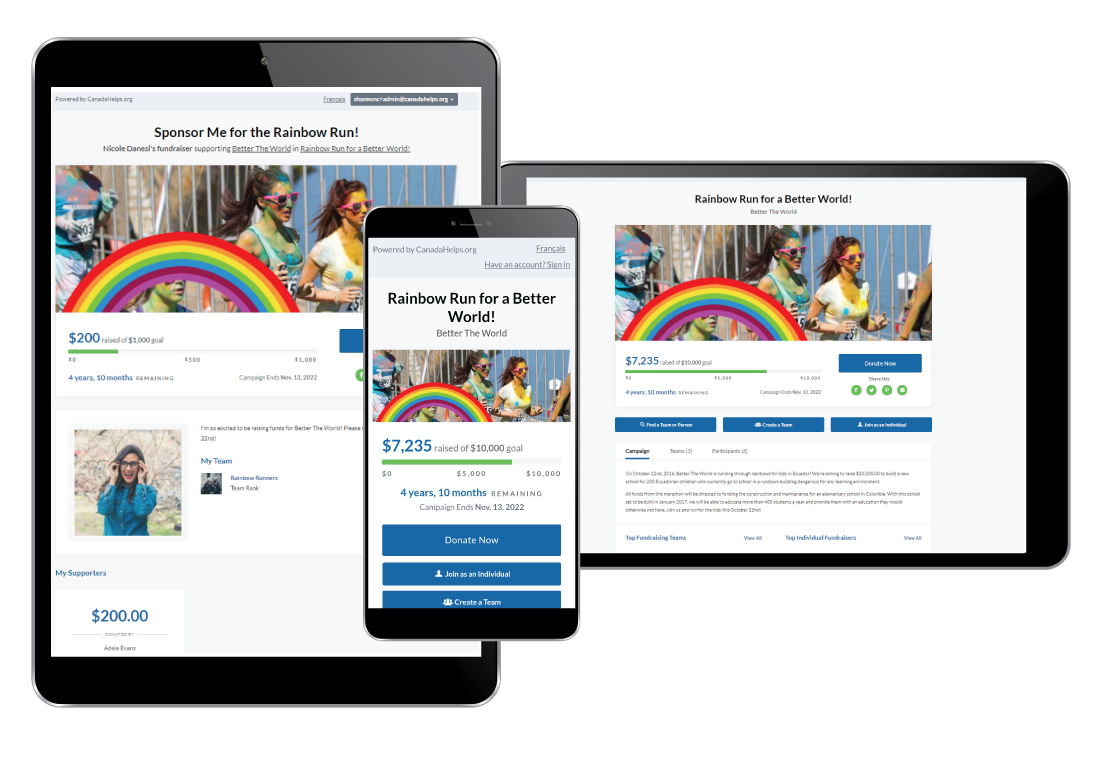
A: We’d be amiss not to mention CanadaHelps peer-to-peer platform which allows you to run peer-to-peer events easily.
- Create a seamless experience with customizable forms
- Use features that encourage friendly competition and sharing
- Let us handle the tax receipting
Q: It’s my first time running a P2P fundraiser, what can I do to get started?
A: Hone in on the type of fundraiser you want to do. Look at the community that you already have and ask them what are some of the interests that they have, what are the things they like to do, would they want to start a team for that. It’s always best to start with the community that is there and already supporting you because those are probably your most likely P2P supporters as well.
Q: It’s our fifth time running a P2P fundraiser, how can we keep this fresh and relevant?
A: Along similar lines, you can use the same strategy of checking in with your community. Doing a survey, having some focus groups for the people who are fundraising, and asking them what’s working, what’s not, do they have any ideas of what they’d like to see, and taking it from there would be a great way to revitalize.
Q: How can people keep up the energy during a peer-to-peer that’s like a longer initiative?
A: It’s not just about the amount of money raised, but also the new people who learn about the organization and stories from new connections. You could have a kickoff party and people make friends that way, or they’ve brought in new fundraisers and now there’s a story there that you can tell. There are also various milestones that can be celebrated, not just the big end goal. You should have some milestone emails set up to congratulate people for hitting goals like being halfway to their personal fundraising goal or getting a certain number of donation or having repeat donors from past campaigns.
Watch the Full Recording
This recap covers just the highlights. Watch the full webinar to get all the practical examples, templates, and detailed discussions that can help improve your P2P program.