In our latest webinar, CanadaHelps’ long‑time partner Kim Fuller of Phil joined us to share strategies for small charity communications teams. This session revisits the webinar Kim presented with us over 10 years ago, which remains one of our most popularly viewed videos on YouTube (receiving close to 30,000 views)!
During the session, Kim provided an updated presentation on building a communications plan—particularly in a saturated market—and new strategies and tools that can be used to reduce overwhelm.
Read on to discover the highlights of Kim’s presentation, or go ahead and watch the replay.
Strategy needs to come first
Small teams often skip planning due to time or budget constraints, but this can end up costing your organization more. A solid communications plan helps your team guide decisions, focus efforts, increase impact, support accountability and reduce overwhelm.
The first hurdle is getting leadership buy-in. You need to get them on board and truly understand how a plan can help you improve efficiency, manage challenges and increase the impact of your communications.
No matter what the size of your organization, you can take small steps to improve your efficiency and the impact of your communications
Building your comms plan
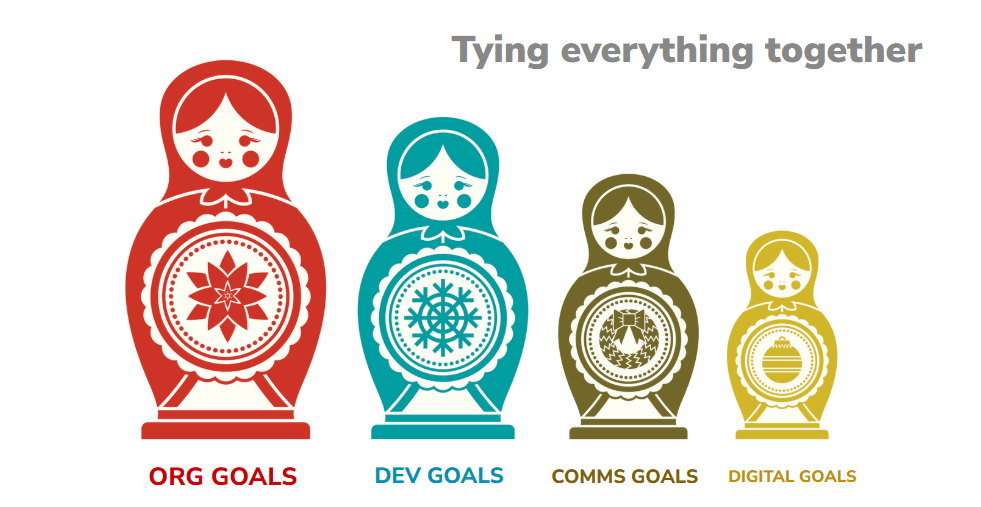
Before building your comms plan, you need to define your strategic priorities as an organization. Your development plan, communications goals and digital goals, all flow directly from your organizational objectives. So, before you begin with your communications planning, you must have these other pieces.
Plans do not need to be huge documents. Effective plans can be 8-10 pages or slides long. What is important is to keep things actionable, and prioritized to match mission and resources. Here is where to start with your communications plan:
- Mission & Goals: Clear purpose and measurable communications objectives.
- Audiences: Identify who you want to reach (donors, volunteers, etc.)
- Key Messages: The main points you want each audience to understand or act on.
- Channels & Tactics: Practical selection of platforms and tools you can manage.
- Content Plan: Simple calendar or ideas for posts, emails, or campaigns.
- Metrics & Evaluation: Quick ways to measure success.
- Roles & Responsibilities: Who does what, even if your team wears multiple hats.
Use it to say “no” to distractions, preventing mission drift. If a Board Member comes to you with the idea to make a TikTok video or speak to a new audience, you can point back to your plan and let them know it is not in the plan this year.
It does, however, need to stay adaptable. If circumstances change, it is a good idea to adapt. Even without change, you should revisit the plan on a monthly or quarterly basis to see if good progress is being made towards your metrics and whether any changes need to be made.
Creating a sustainable content calendar
Once you have your comms plan, it’s time to build a sustainable content calendar. To make work more efficient batch creation, prep ahead for roughly 80% of your content, leaving 20% of slots for timely, or ad-hoc pieces. You’ll also want to maximize the lifecycle of your strongest pieces, so in the planning, ensure you have a column where you can mark best performing pieces to be repurposed and reposted.
Defining positioning and core statements
Clearly positioning your organization is how you can stand out among a crowded market. You need to be as clear as possible on the core elements that define your organization.
- Tagline → emotional entry point
- Purpose → why your organization exists
- Vision → the future you’re working toward
- Mission → what you do day-to-day
- Values → how you behave while doing it
- Positioning → what your organization does and how you are different
- Theory of Change → how that work leads to broader impact
Go through the exercise of defining each of these elements so you can powerfully articulate your organization’s unique positioning and theory of change. You should involve leadership, board, staff, volunteers, and beneficiaries for complete buy-in.
Putting this on your Charity Profile with CanadaHelps is a great place to showcase your charity and reach new donors. Try it out for yourself.
A complete, updated profile helps build trust and increase donor confidence.Update Your Charity’s Public Profile on CanadaHelps

Measuring and evaluating success
Part of your comms plan is measuring and evaluating success. Some examples of KPIs include:
- Number of new donors/ members/ clients
- Average gift size or donation growth rate
- Website traffic or email conversion rates
- New followers gained or social engagement interactions
Many platforms you may already be using, offer built-in, easy-to-digest analytics. You can develop a process to regularly check-in, monitor performance and adjust strategies.
Organizations that measure results and adjust based on data are more than twice as likely to improve year-over-year performance.
Understanding audience segmentation bias
Sending a specific message to a targeted audience is much more effective than trying to send a generic message to everybody. Evaluate how many segments you currently have and whether they make sense and help to move the needle. An easy place to start is with 2-3 segments based on their relationship with your organization e.g. “knows us well,” “somewhat,” “new to the organization.”
It was interesting to see that almost a quarter of charities that joined us on the webinar, only had one list, while 14% had more than five!
Once you have your audiences defined, tailor messages, skip intros for those that know you already and thank them for their steadfast support, and welcome those that are just getting to know you.
Ask: Who are they? What are they interested in? What is the next logical step in their journey?
Adopting AI as co-pilot
AI is a new tool that can help reduce the busy work and allow staff to focus on what is important. But, it needs to be approached carefully. In our webinar, close to 80% of attendees were using AI to some degree at their organization, but only 16% had widely adopted it as a part of the strategy.
Therefore, developing an AI user policy to prevent sensitive information being shared, and educating users on the possibility of inaccurate or biased output from AI tools is key. Investing in paid tools may be a good step as free tools often use data for learning which adds risk.
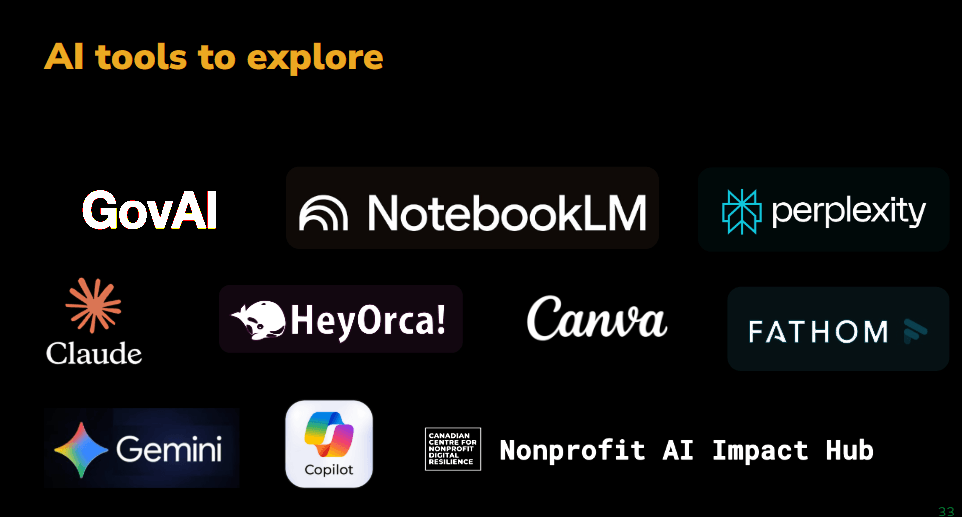
Each of these tools are linked in the slide deck for your convenience. Download the slide deck here.
There’s a huge range of AI tools available to aid with content creation, data visualization, note taking and more; research suggests that organizations can easily save up to 12 hours a week just by automating emails to donors.
CanadaHelps has long been a proponent of technology that assists charities to do the work they are doing. Our fundraising tools, while not quite AI, can save you hours of time by providing automated donor tax receipts, thank you emails and other support, so you can focus on your mission.
Create a frictionless donor experience with optimized donation forms, in just a few clicks.Seamless Giving, More Impact