This blog is written by Stephanie Jacobs from Thriving Nonprofits. An experienced nonprofit leader, Stephanie has previously served as an Executive Director and Board Director. She has also worked in communications, program development, and community education. As the Thriving Nonprofits Program Coordinator, she works closely with nonprofit leaders to critically assess their revenue models, identify entrepreneurial growth opportunities, and develop practical strategies for revenue diversification and long‑term organizational resilience.
If you’re interested in learning more about the possibilities of nonprofit revenue diversification, watch this webinar on the topic featuring Kristi Rivait from the Thriving Nonprofits team: Nonprofit Revenue Diversification: What’s Possible?
Nonprofit Revenue Diversification: What’s Possible?
The nonprofit and charitable sector is powerful. It employs millions of people, contributes greatly to Canada’s GDP, and delivers essential services to communities across the country. Every day, organizations respond to crises, protect ecosystems, support culture, and take care of us, building the types of communities we want to be part of. I can’t imagine, nor do I want to, where our world would be right now without the dedication of the people driving the nonprofit sector.
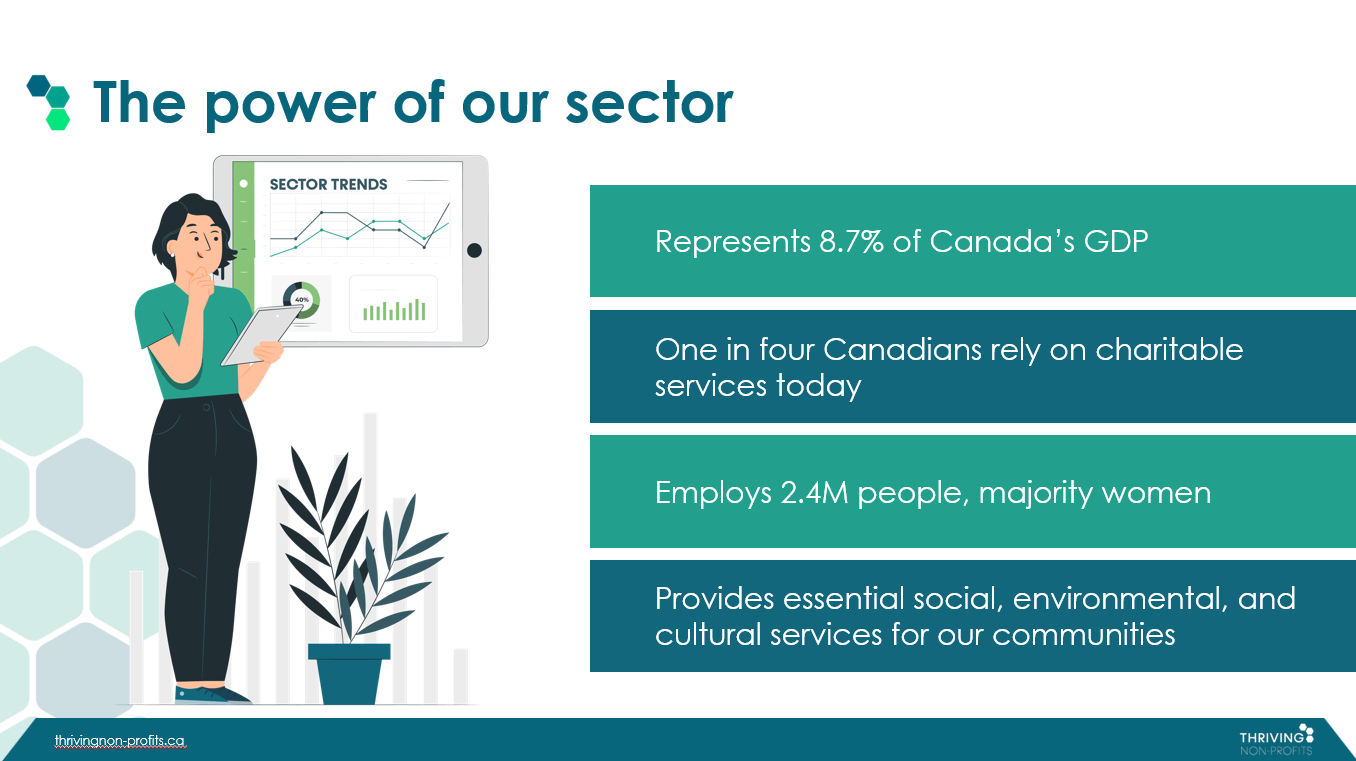
And yet, so much of this work happens under the constant pressures of resource scarcity.
Nonprofit leaders are asked to do more with less, navigate uncertainty, and stretch limited dollars ever further. Funding is often short-term, restricted, and unpredictable. This gap between the importance of the work and the resources available to sustain it is a systemic failure. Unfortunately, it’s organizations, and the communities they serve, pay the price. At Thriving Non-Profits we are working to build a stronger, more resilient, social change sector – and revenue diversification is one way organizations can respond.
Why Revenue Diversification Matters
Revenue diversification is about building resilience. It is about shifting the narrative of scarcity and sacrifice that can overwhelm our day-to-day working to advance our mission. When an organization relies heavily on one or two funding sources, it becomes vulnerable. In recent years, there have been many shifts in policy, funder priorities, and economic conditions outside of our control. It also often means just surviving, in that annual grant and donor cycle, where we spend half our time searching for funds when we could be doing the work.
Diversifying revenue can increase stability, flexibility, and decision-making power. It can reduce stress on staff and boards. It can also create space to plan, invest, and focus on impact rather than constantly reacting to funding pressures.
The Honeycomb Approach
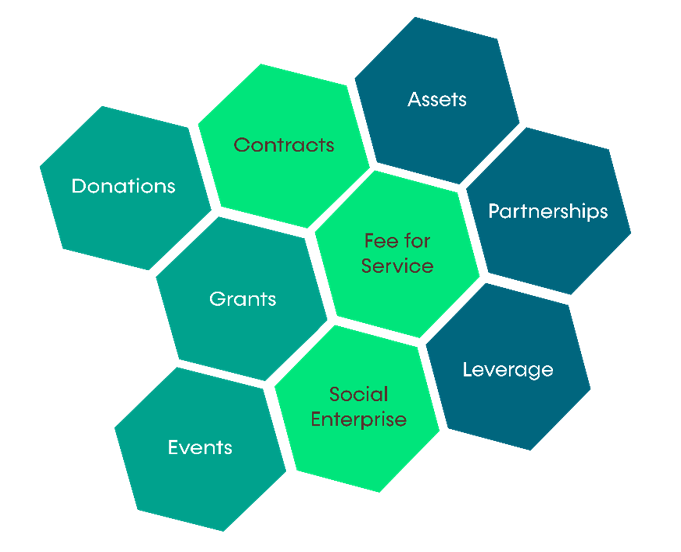
At Thriving Non-Profits, we talk about revenue diversification using a honeycomb model. It provides a visual to see all of the options for revenue that a nonprofit or charity can attract or develop. We look at building a mix of different, but aligned revenue streams, over time, growing earned revenue initiatives and building assets, alongside traditional philanthropic revenue. Each cell in the honeycomb represents a different source of revenue. Some grow slowly, others more quickly. Together, they create a structure that is stronger and more resilient than any single stream on its own.
Revenue Diversification Options: From Traditional to Entrepreneurial
Revenue diversification looks different for every organization, shaped by mission, values, community, capacity, and risk tolerance. While the mix will be unique, most nonprofit revenue strategies fall into the categories outlined in the honeycomb. Below is a brief overview of each of the options that you can consider.
Traditional Funding: Grants, Donations, Events, and Government Contracts
These familiar sources remain essential, and an entrepreneurial approach focuses on alignment, relationship-building, and understanding risk, and return on investment, rather than over-reliance or constant chasing.
CanadaHelps is a great platform for supporting your traditional funding. With fundraising tools for regular donations, monthly giving, peer-to-peer fundraising, events and more.
See how our platform can help your charity grow donations and engagement.Discover How CanadaHelps Can Transform Your Fundraising

Fee for Service
Charging for programs, services, or expertise can create earned revenue while ensuring programs remain accessible. Designing earned revenue opens opportunities for earned revenue. While tools like sliding scales, tiered pricing, subsidies, or third-party payers,help protect access and values as we do so. This is often where limiting beliefs and the scarcity mindset of “this is always the way it has been done” come into play.
Social Enterprise
Mission-aligned businesses, whether embedded within the organization or structured separately, can generate unrestricted revenue at market rates, while directly advancing social or environmental outcomes.
Assets
A broader view of assets includes not just cash, but also space, equipment, staff skills, intellectual property, networks, and brand, all of which organizations can leverage to support long‑term financial health.
Partnerships
Values-aligned partnerships with businesses, institutions, or other nonprofits can unlock new revenue, reach, and capacity when structured as true win-win relationships.
Leverage
Strategically aligning how you hire, purchase, bank, invest, and operate can amplify both impact and financial resilience without creating entirely new programs.
Start Today
A strong place to begin is by reviewing your current state. Where does your revenue come from today? Which sources feel stable, and which feel risky? Where do you already have strengths, assets, or opportunities that are under-leveraged?
From there, focus on understanding both your risks and your possibilities. Assess your capacity, your entrepreneurial spirit, your governance and leadership. Then, begin to think strategically about where you could strengthen, grow, or add a revenue stream to your organization.
You Do Not Have to Do This Alone
Revenue diversification can feel daunting, especially in a sector already stretched thin. Learning alongside peers, getting external perspective, or working with values-aligned support can make the work more manageable and more effective.
Explore what revenue diversification could look like for your organization or discover how to get started by reaching out. There is more possible than many nonprofit leaders have been led to believe.
Curious to learn more? Visit www.thrivingnonprofits.ca to access courses, resources, and expert support to build your nonprofit’s financial resilience.