Imagine your phone rings tomorrow.
A lawyer is calling. One of your long-time supporters has left your charity $35,000 in their Will.
No fundraising campaign. No gala. No grant application. Just one thoughtful decision made years earlier by someone who cared deeply about your mission.
What would you do with it?
For many small and medium-sized charities, funding like this feels out of reach. But it isn’t. New Canadian research on gifts in Wills shows they are one of the fastest-growing forms of charitable giving. The number of everyday Canadians who’ve already included a charity in their Will has doubled in the last five years, and nearly one in two are now considering a charity for their Will.
So there’s a pretty good chance your organization will get that call in the future.
This is a guest blog by Laurie Fox from WillPower who presented The Rise of Gifts in Wills. Check out the webinar replay and slide deck here.

3 Steps any charity can take to get started in planned giving
The research points to one simple truth: more Canadians are thinking about giving through their Wills than ever before. For people who care deeply about a cause and want to see change in this world, it’s an easy way to make a big impact without taking away from the money they or their family need.
The organizations that consistently remind supporters that a gift in a Will is an option are the ones most likely to benefit over time.
Planned giving (or legacy giving when we’re speaking about gifts in Wills) can sound intimidating, especially if you’re a small team without a specialist on staff. The good news is that you don’t need to build a sophisticated program overnight.
Here are 3 steps you can take now to get started.
Step 1: Identify your best legacy prospects
If you’re picturing a wealthy retiree as your best legacy prospect, you wouldn’t be alone. But today’s research tells a different story.
Younger Canadians are more likely to be interested in the idea of giving through their Will. In fact, more of them have already done it.
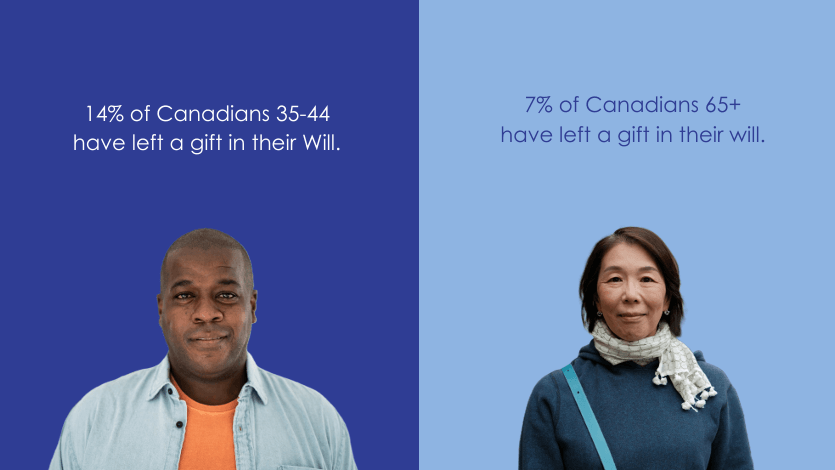
And yes, it may be years before their gift is realized. But its impact can begin much sooner. Research by Dr. Russell James found that after donors included a charity in their Will, their annual giving increased too – by an average of 75%!
We’re not just talking about the wealthy elite either. Everyday Canadians, with household incomes between $60,000 and $200,000, are the ones most likely to leave a gift in their Will. Think nurses, teachers and small business owners – people who may not have significant disposable income now but are building wealth over time through a home, cottage or farm.
Where to find your best legacy prospects:
This research gives you permission to widen the net. But really, your first legacy conversations should be with your biggest champions: your board members, key donors, volunteers and staff depending on your organization.
Once you’re more comfortable and have more capacity, expand the conversation to your wider audience. Use the research to look beyond giving history alone and bring young and diverse supporters into the fold.
One way to reach that young and diverse audience? Join the Will Power campaign and get in front of Canadians exploring a gift in their Will.
Step 2: Have the legacy conversation
People don’t leave gifts in their Wills because they’re responding to an urgent need. They don’t do it for the tax break either. They do it because they want to make a lasting difference, support causes that reflect their values, and set an example for future generations.
Legacy giving is different from all other types of giving because it’s tied to a donor’s identity, life story and sense of who they are. Or what Dr. James calls the “autobiographical centre” of the brain.
And for most people, family is central to that story. That’s why the biggest barrier to legacy giving is concern for loved ones. People assume that including a charity in their Will means taking something away from them.
One simple message can change that “even 1% of your estate could make a big difference, while still leaving 99% for the people you love”. You can use the Will Power legacy calculator to help them visualize what that looks like. They can even see how their gift could reduce taxes on their estate (though that’s usually a conversation for later).

Once people realize they can make a meaningful gift without taking away from family, you can almost see their shoulders relax and their eyes light up at the impact they could have in the world.
How to have the legacy conversation:
Charities are often hesitant to talk to donors about gifts in Wills because they worry it means talking about death. Naturally, they worry about offending a donor.
But the conversation is never about death. It’s about life, values and impact. Here’s how a typical legacy conversation with a donor may go:
- Connect: Ask how they became involved with your cause. This often opens a natural conversation about the people and experiences behind their giving.
- Explore: Ask which parts of your work matter most to them and what change they hope to see in the future.
- Introduce the idea: Share how another donor chose to leave a small percentage in their Will because they also cared about x or y. Nothing major, they still have family to take care of, just a small percentage to make sure the good work lives on.
- Ask: “Is that something you’ve ever considered?”
Step 3: Build a simple legacy marketing program
One-on-one conversations are powerful, especially with the supporters closest to your organization. But many supporters simply aren’t going to take a meeting, let alone answer a call. That’s where legacy marketing comes in.
Legacy marketing lets you reach a much wider group of supporters where they are, introducing ways to make an impact they may not know are possible.
Fair warning: it can be a long journey, with many touchpoints along the way. Someone might first hear about legacy giving from a friend, read an article online a year later, then see it mentioned on their charity’s annual tax receipt. With enough meaningful and relevant prompts, the idea sticks. So when they eventually do write or revise their Will, a gift in their Will is top of mind.
That’s the goal of a legacy outreach program – to make sure your charity is top of mind.
How to start a legacy marketing program:
You don’t need a dedicated planned giving department to begin. Start with a few consistent actions.
- Add a few words about gifts in Wills to your website. Make sure to include a contact person, your charity’s legal name and charitable registration number – this is as important for legal professionals drafting or executing Wills as it is for donors.
- Include a few words about gifts in Wills in email footers, tax receipts, direct mail appeals, and donor newsletters. These are quick and easy regular touchpoints.
- Tell your board, staff and volunteers about this giving option so word can spread.
- And finally, have a simple one-page brochure ready for the donors who express interest. It should explain how gifts in Wills work, reassure people they can take care of both family and the cause they love, and include sample Will wording they can take to their legal professionals.
An even quicker way to get started in planned giving?
If your organization has limited time or capacity, programs like Will Power can help you get started faster, with ready-made marketing materials, donor communications and connections to Canadians already exploring this kind of giving.
It’s planned giving in a box: everything you need to focus on building relationships instead of creating every resource from scratch.
Learn how to join Will Power as a charity partner.
You don’t need a perfect plan to begin
Still imagining that $35,000 phone call? Hopefully it no longer feels like wishful thinking.
Three million Canadians and counting are already leaving gifts in their Wills. The charities that receive those gifts aren’t always the biggest. They’re often the ones that consistently remind donors that this meaningful way of giving exists.
You don’t have to do everything at once. Start with one conversation. One webpage. One story. Then keep building. Because the seeds you plant today could become the transformational gifts your organization receives tomorrow.